How to Use These Tax Filing Guides
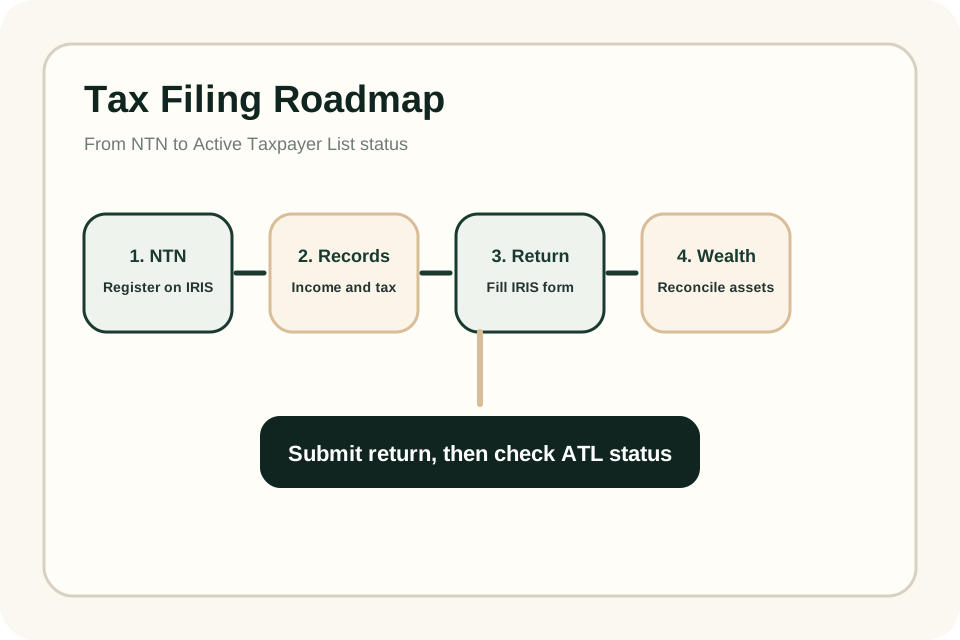
Choose the guide that matches your situation. If you have never filed a return before, start with the NTN registration guide, then move to the return filing guide. If you are already registered and want to check your filer status, use the ATL verification guide.
These guides are written for salaried persons, freelancers, and self-employed individuals. For income estimates, use the tax calculator.
How Tax Return Filing Works in Pakistan
Every taxpayer earning above the taxable threshold should file an annual income tax return in Pakistan. The return covers income, deductions, withholding tax credits, and net tax liability for the financial year from July 1 to June 30.
Apply for your National Tax Number through FBR IRIS using your CNIC.
Enter salary, freelance income, business income, or other sources.
Submit your return through FBR IRIS before the annual deadline.
Which Filing Guide Should You Use First?
The right filing guide depends on your current stage. A person who has never registered should not start with return filing; they should first create or recover their NTN/IRIS access. A person who already filed should focus on ATL status, notices, and tax deduction records.
| Your Situation | Start Here | Next Step |
|---|---|---|
| No NTN or IRIS account | Apply NTN online | Save credentials and update profile. |
| Have NTN but never filed | FBR tax return filing guide | Prepare income, deductions, and wealth statement. |
| Filed but not showing active | NTN and ATL verification | Check return status and ATL update cycle. |
| Business owner | Business registration | Check sales tax and bookkeeping obligations. |
Practical Use and Record-Keeping
Use this guide as a planning checklist, then confirm the final treatment from the official portal, challan, employer certificate, bank certificate, or FBR notice that applies to your case. For tax matters, the document trail is often as important as the rate itself because IRIS filings, withholding claims, and wealth statements rely on matching evidence.
Keep source documents, payment receipts, certificates, screenshots, and correspondence in one folder for the tax year. When numbers do not match, it is much easier to fix the issue before filing than after a notice, mismatch, refund claim, or transaction review appears.
All Tax Filing Guides
Use these guides to understand NTN registration, annual return filing, active taxpayer status, and FBR slab rules in Pakistan.
Most Common Tax Filing Searches
These are the most frequently searched tax filing topics in Pakistan because they affect filer status, banking rates, and annual return compliance for millions of taxpayers.
Why Filing a Tax Return Matters in Pakistan
Filing a tax return in Pakistan keeps you on the Active Taxpayer List (ATL), which qualifies you for lower withholding tax rates on banking transactions, property purchases, vehicle registration, dividends, and many other financial activities.
Non-filers pay significantly higher WHT rates on the same transactions. Filing also creates an official record of income, which supports visa applications, bank loan approvals, and property transactions.
Who Needs to File a Tax Return in Pakistan
The following persons are generally required or strongly advised to file an income tax return in Pakistan each year:
- Salaried persons with annual taxable income above the exempt threshold.
- Freelancers and IT exporters receiving foreign remittances.
- Self-employed professionals and sole traders.
- Business owners and partners in firms.
- Property owners earning rental income.
- Investors earning dividends, profit on debt, or capital gains.
Useful Tax Tools & Related Guides
These pages connect the full tax filing and compliance topic cluster.
Estimate monthly tax and take-home salary before filing.
Tax Slabs FBR Tax Slabs 2026-27See the current salary and business income tax slab rates.
Salary Salary Tax GuidesBrowse tax examples by monthly salary amount.
Freelancer Freelancer Tax GuidesTax rules for Fiverr, Upwork, IT exports, and remote work.
Net Salary Salary After TaxUnderstand how gross salary converts into take-home pay.
Comparison Salary vs Business TaxCompare tax treatment across income types.
Official FBR Resources
Use official government resources to file returns, verify NTN status, and access tax ordinance information.
FAQs About Tax Filing in Pakistan
How do I file an income tax return in Pakistan?
File your annual income tax return through FBR IRIS at iris.fbr.gov.pk. You need an active NTN linked to your CNIC. Log in, declare your income, add tax deductions, and submit before the deadline.
What is the tax return filing deadline in Pakistan?
File by the applicable FBR deadline for the relevant tax year. FBR may issue extensions or taxpayer-specific guidance, so verify the current deadline before submission.
How do I get an NTN in Pakistan?
Apply online through FBR IRIS using your CNIC, mobile number, and email address. Salaried persons and freelancers register as individuals. NTN registration is free.
What is the Active Taxpayer List (ATL)?
The ATL is a list published by FBR of persons who have filed their income tax returns. Persons on the ATL are considered filers and qualify for lower withholding tax rates on banking, property, and other transactions.
Can I file a return even if no tax is owed?
Yes. Filing a nil return or a return with zero net tax still keeps you on the Active Taxpayer List and protects your filer status for the year.
File Your Tax Return This Year
Use the guides above to understand the filing process, estimate your tax, and prepare your documentation. For personalised help with return filing, NTN registration, or filer status, contact support.