What Is the Difference Between a Filer and a Non-Filer in Pakistan?
A filer is a taxpayer whose name appears on Pakistan's Active Taxpayers List (ATL) after filing the required income tax return for the relevant tax year.
A non-filer is a person who is not active on the ATL. Non-filers usually face higher withholding tax rates, weaker financial documentation, and more friction in major transactions such as property, vehicle registration, banking, and investment activity.
Your name appears on the Active Taxpayers List.
Filers usually face lower withholding tax rates.
Filed returns support income and asset records.
Why This Guide Matters
Many salaried employees, freelancers, business owners, property buyers, vehicle owners, and investors in Pakistan pay unnecessary withholding tax simply because their name is not active on the ATL.
This guide explains the practical difference between filer, late filer, and non-filer status using real-world situations commonly faced in Pakistan.
Filer and Non-Filer Comparison in Pakistan
The main difference is not only tax rate. Filer status also affects documentation, transaction cost, banking profile, property dealings, vehicle registration, and how easily you can explain income sources.
| Area | Filer | Non-Filer |
|---|---|---|
| ATL Status | Active on ATL | Not active on ATL |
| Withholding Tax | Usually lower | Usually higher |
| Banking Profile | More documented | Can appear incomplete |
| Property Transactions | Usually smoother with lower tax impact | Often higher tax cost and more questions |
| Vehicle Registration | Usually lower withholding impact | Usually higher withholding impact |
| Income Documentation | Return record supports declared income | Income history may be harder to prove |
| Compliance Record | Stronger when records are accurate | Can create issues later |
Active Filer vs Late Filer vs Non-Filer
In Pakistan, people often use the word “filer” generally, but there can be a practical difference between an active filer, a late filer, and a non-filer.
| Status | Meaning | Practical Impact |
|---|---|---|
| Active Filer | Filed by the due or extended date and appears on ATL | Generally receives the lowest applicable ATL withholding treatment |
| Late Filer | Filed after the due or extended date and completed the applicable ATL surcharge requirement | Can appear on ATL, but specified transactions may use separate late-filer rates |
| Non-Filer | Not active on ATL | Usually faces higher withholding tax and documentation friction |
Filer and Non-Filer Tax Rates in Pakistan 2026-27
The table below shows the main FY 2026-27 differences used by this page's comparison tool. Rates apply to the stated transaction base, not automatically to your total income. A separate late-filer rate may apply where the law specifically provides one.
| Transaction | ATL Filer | Non-ATL |
|---|---|---|
| Bank profit | 20% | 40% |
| Cash withdrawal above the daily threshold | No section 231AB charge | 0.8% |
| Property purchase under section 236K | 1.5% to 2.5%, based on value | 3.0% to 5.0%, based on value |
| Property sale under section 236C | 2.75% | 5.5% |
| New vehicle purchase or registration | 0.5% to 12%, by engine capacity | 3 times the ATL amount |
Legal basis reviewed against Finance Act 2026 and FBR ATL guidance. Rate registry: FY-2026-27.2026-08-15.
Can a Non-Filer Buy Property or a Car?
In many situations, a non-filer may still be able to buy property or a vehicle, but the transaction can become more expensive because higher withholding tax may apply. Additional documentation questions may also arise if income sources, bank activity, or assets are not properly explained.
For property buyers, vehicle owners, investors, and business people, becoming a filer is not only about saving tax. It also helps build a documented financial profile that can support future transactions.
Benefits of Becoming a Filer
Filing tax returns helps create a proper financial profile and improves compliance visibility. This can matter for property, vehicles, banking, loans, visas, business documentation, and investment records.
Reduced withholding tax in many situations.
Useful for visas, banks, financing, and records.
Supports long-term tax compliance.
Practical Advantages
- Lower withholding tax exposure in many transactions.
- Better income documentation for banks, loans, and visas.
- Easier explanation of assets, savings, and major purchases.
- Better readiness for property purchase, sale, or transfer.
- Stronger financial profile for business or investment records.
What Non-Filers May Miss
Non-filer status can affect more than tax deductions. It can create delays, higher transaction costs, and documentation problems when you need to prove income or complete a major financial transaction.
- Higher withholding taxes on many transactions.
- More expensive property and vehicle dealings.
- Difficulty explaining documented income sources.
- Weaker banking and financial records.
- Possible issues reconciling assets, savings, or lifestyle later.
- More friction when applying for loans, visas, or business documentation.
Compliance and Financial Documentation
Filing tax returns is not only about tax savings. It also creates documented financial records that may become important during banking, investments, business activities, property transactions, or visa documentation.
How to Check ATL Status Online
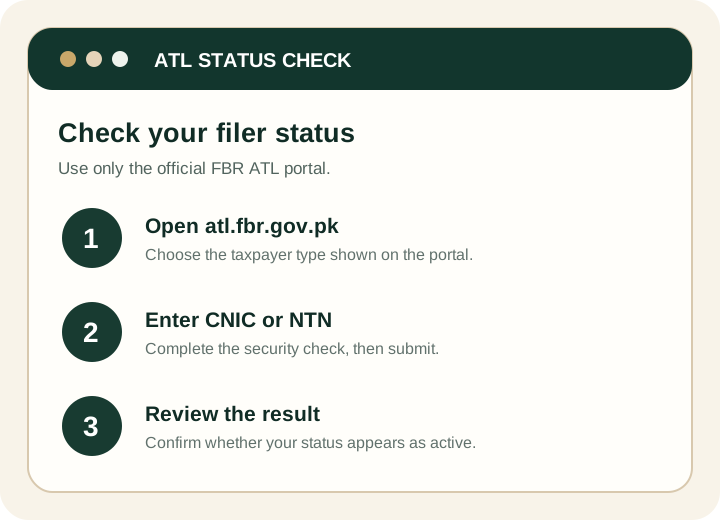
You can check whether you are active on the FBR Active Taxpayers List through the official online verification, by SMS, or by downloading the current ATL. FBR states that the list is updated daily. Check immediately before buying property, registering a vehicle, or receiving investment income.
- Online: open the official ATL verification and enter your CNIC or NTN.
- Individual by SMS: send
ATL 13-digit-CNICto 9966. - Company or AOP by SMS: send
ATL 7-digit-NTNto 9966. - If you are not active, confirm the relevant return was filed and whether an ATL surcharge or other update step remains outstanding.
How to Become a Filer in Pakistan
To become a filer, you generally need to prepare your income records, file your tax return, complete your wealth statement where required, submit through FBR IRIS, and confirm your ATL status.
For the complete screenshot-based process, learn how to file your FBR income tax return through IRIS.
- Register or access your account on the FBR IRIS portal.
- Confirm your NTN/CNIC registration and profile information.
- Collect salary, business, freelance, rental, or investment records.
- Prepare your income tax return for the relevant tax year.
- Prepare your wealth statement and reconcile it properly.
- Submit your return and verify ATL status after processing.
Documents Usually Needed
- CNIC and registered mobile number.
- Email address and IRIS credentials.
- Salary certificate or business income records.
- Bank statements and withholding certificates.
- Asset details including property, vehicles, investments, and liabilities.
Example: Filer vs Non-Filer Tax Difference
Suppose two people are buying the same vehicle or property. One is active on ATL and the other is not. The filer may face lower withholding tax treatment, while the non-filer may face a higher tax deduction.
The exact amount depends on the transaction type and current tax law, but the practical result is simple: filer status can reduce upfront tax cost and improve documentation.
Common Myths About Filers and Non-Filers
Tax deduction alone does not always mean you are active on ATL.
Salary, assets, business, property, or documentation needs may make filing useful.
ATL status depends on relevant filing and update requirements.
Many non-filers still pay withholding tax but may not be compliant filers.
Official FBR Links
Use official portals for verification, return filing, taxpayer profile, notices, and ATL status checks.
Filer and Non-Filer in Pakistan FAQs
What is a filer in Pakistan?
A filer is someone whose name appears on the Active Taxpayers List after filing the required income tax return.
What is a non-filer?
A non-filer is someone who is not active on the ATL and may face higher withholding tax rates and weaker documentation.
What is a late filer?
A late filer submitted the relevant return after the due or extended date. FBR says the person can be included on ATL after paying the applicable section 182A surcharge, while specified transactions may still apply separate late-filer withholding rates.
Can a non-filer become a filer later?
Yes. A non-filer can become a filer by filing the required tax return, completing wealth statement requirements where applicable, and checking ATL status after processing.
How long does ATL activation take?
FBR states that ATL is updated daily. Timely filers are included after filing for the relevant tax year; a late filer must also satisfy the applicable ATL surcharge requirement. Verify the live status before a transaction.
Can a filer become non-filer again?
Yes. If filing obligations are not maintained for the relevant tax year or ATL requirements are not met, a person may not remain active.
Can salaried people become filers?
Yes. Salaried employees can file their income tax return and appear on the Active Taxpayers List when requirements are met.
Can freelancers become filers?
Yes. Freelancers can become filers by declaring income, completing filing requirements, and submitting their return through FBR IRIS.
Can overseas Pakistanis become filers?
Overseas Pakistanis may need to review their Pakistan-source income, assets, banking activity, and filing requirements before deciding how to file.
Final Summary
Becoming a filer generally improves tax compliance, reduces withholding tax exposure, and supports stronger financial documentation.
Non-filer status can create additional tax costs, transaction friction, and documentation difficulties later. If you earn income, own assets, buy property, register vehicles, invest, or need a proper financial profile, filer status is usually worth checking.