Federal sales-tax registration is based on the categories and conditions in the Sales Tax Act, not one universal turnover figure. Importers, non-cottage manufacturers, wholesalers, distributors, tier-1 retailers, and other prescribed persons may need an STRN. Taxable services are generally handled by the relevant provincial or ICT authority. Verify the current return due date and any extension on the controlling portal.
What Is Sales Tax (GST) in Pakistan?
Sales Tax in Pakistan — commonly called GST (General Sales Tax) — is a consumption tax levied on the supply of goods and certain services governed by the Sales Tax Act 1990 and administered by FBR. Businesses collect it from customers, deduct the tax they paid on inputs, and remit the difference to FBR via the input-output mechanism.
Services sales tax in the four provinces is administered by their provincial revenue authorities — PRA (Punjab), SRB (Sindh), KPRA (KPK), and BRA (Balochistan) — not FBR directly.
Who Must Register for Sales Tax?
The following are required to register under the Sales Tax Act 1990:
- Manufacturers other than those falling within an applicable cottage-industry or other exclusion
- Importers who import taxable goods into Pakistan
- Exporters seeking zero-rating on their supplies
- Wholesalers, dealers, distributors, and tier-1 retailers where the statutory definitions apply
- Other persons required by federal or provincial law, registration notice, or prescribed rules
Voluntary registration may be available. Eligibility, input-tax claims, invoicing, and filing duties should be checked before registering because an STRN creates continuing compliance obligations.
GST Rates in Pakistan 2026-27
Other enacted changes: books, newsprint, and magazines are exempt subject to the enacted wording; contraceptives and female sanitary pads/tampons were added to the exemption schedule; specified EV concessions were extended to June 30, 2027; and registered persons may face stronger digital-invoice and production-monitoring requirements.
Zero-rated vs Exempt — a critical difference: Zero-rated suppliers can claim input tax refunds. Exempt suppliers cannot claim input tax credits on their purchases. If your supplies are exempt, you cannot register and lose input tax recovery.
STRN vs NTN — Key Differences
| Feature | NTN | STRN |
|---|---|---|
| Stands for | National Tax Number | Sales Tax Registration Number |
| Purpose | Income Tax identification | Sales Tax identification |
| Governing Law | Income Tax Ordinance 2001 | Sales Tax Act 1990 |
| Who needs it | Persons required to register/file under income-tax law | Importers, non-cottage manufacturers, wholesalers, distributors, tier-1 retailers, and other prescribed persons |
| Return frequency | Annual, by the applicable income-tax deadline | Monthly, by the applicable sales-tax deadline |
| Same as CNIC? | Yes, for sole proprietors | No — separate 13-digit number |
How to Get Your STRN — Step-by-Step on IRIS
You must already have an NTN before you can apply for STRN. See: FBR Registration Guide →
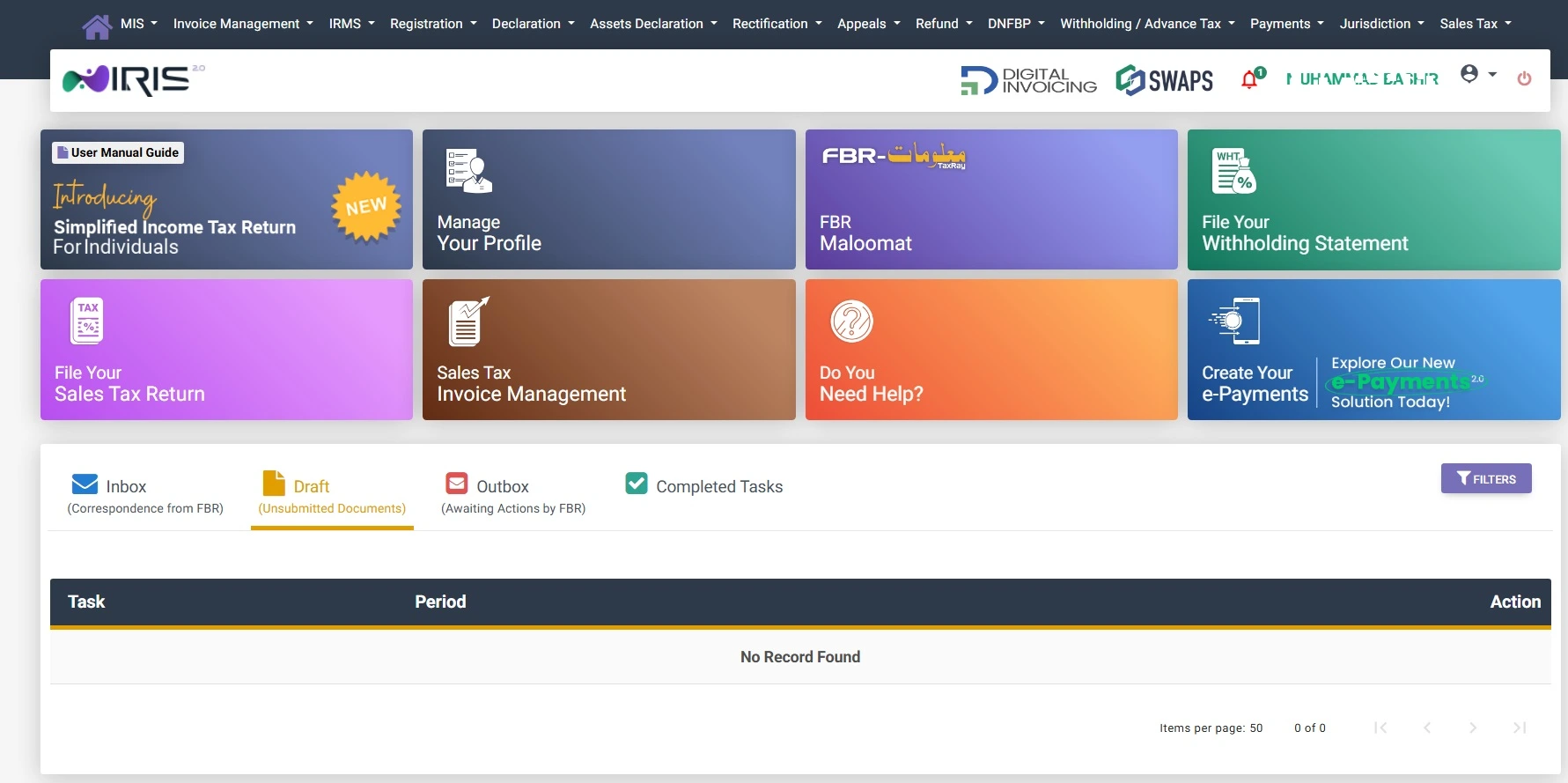
Log In to IRIS
Go to iris.fbr.gov.pk and log in using your existing NTN credentials.
Open Form 14(1) — Sales Tax Registration
In IRIS, navigate to Registration → Sales Tax and open Form 14(1).
Fill in Business Details
Enter your business name, nature of supply, category (manufacturer/importer/distributor/retailer), and all business addresses where taxable activities occur.
Upload Supporting Documents
Required: CNIC, NTN, business address proof (utility bill or lease), bank account certificate, and photos of business premises.
Submit and Receive STRN
After FBR verification (1–5 working days), your STRN is issued. You'll be notified on your IRIS dashboard and registered mobile number.
Issue FBR-Compliant Sales Tax Invoices
Once registered, every taxable supply must be accompanied by a compliant invoice including your STRN, the buyer's STRN, invoice date, and HSN code for goods.
Filing Your Monthly Sales Tax Return
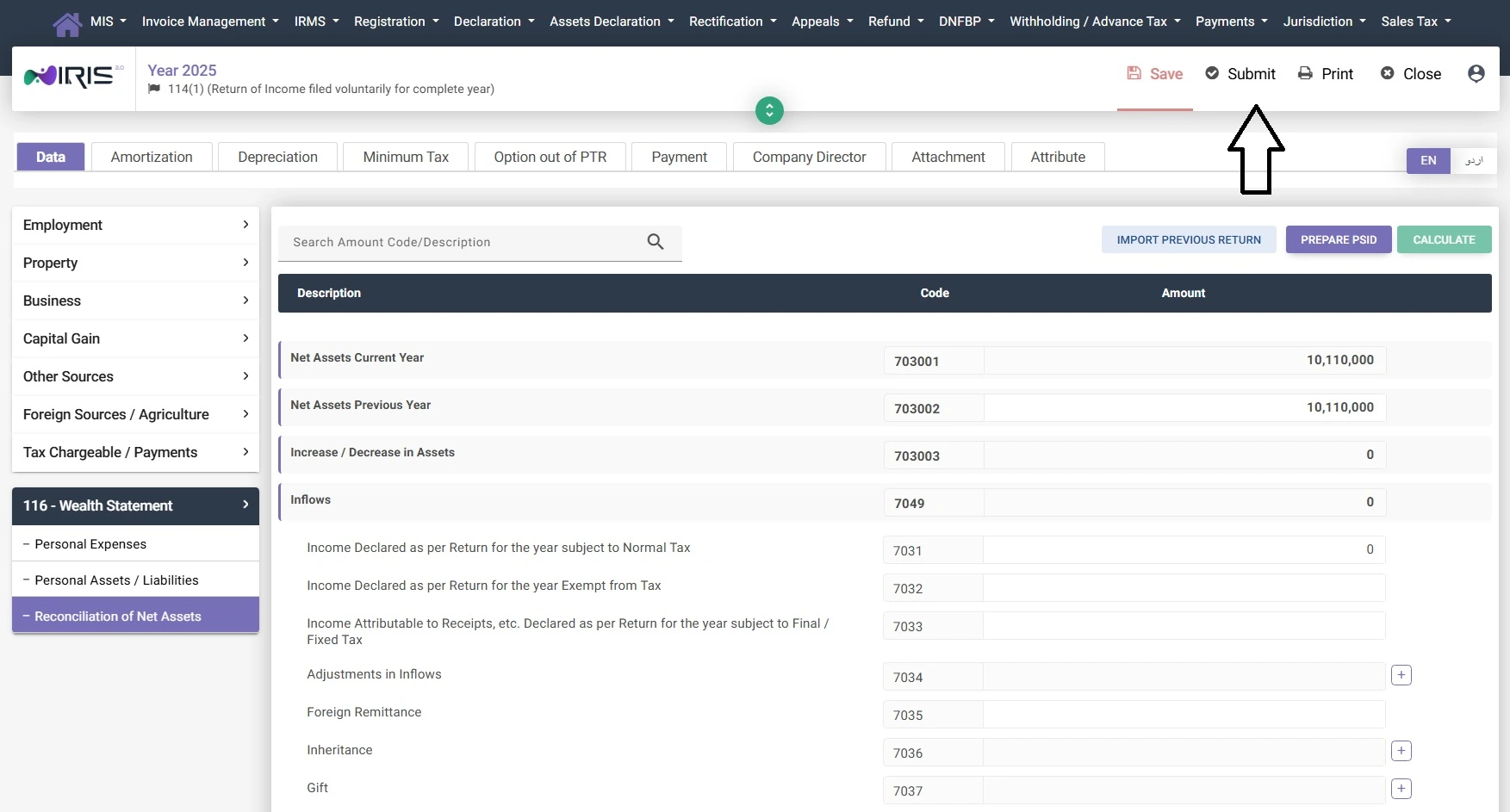
Every registered person must file a monthly Sales Tax Return by the 18th of the following month — even months with no sales require a nil return. The return covers:
- Output tax: Sales tax collected from customers during the month
- Input tax: Sales tax paid on purchases and imports (claimable as a credit)
- Net payable: Output tax minus admissible input tax
Input Tax Credit Rule: You can only claim input tax on purchases from other registered persons who issued valid FBR sales tax invoices. Purchases from unregistered suppliers give you zero input tax credit.
Penalties for Non-Registration and Late Filing
| Offence | Penalty |
|---|---|
| Failure to register when required | Rs 10,000 per month or 5% of tax involved (whichever higher) |
| Failure to file monthly return on time | Rs 10,000 per return + default surcharge |
| Issuing invoices without STRN | Up to Rs 50,000 per invoice |
| Under-reporting output tax | 100% of unpaid tax + prosecution |
| Claiming inadmissible input tax | Amount involved + 100% penalty |
Separate status checks: Income-tax ATL status and sales-tax registration/return compliance are related but distinct. Higher withholding applies only where the relevant income-tax section provides it.